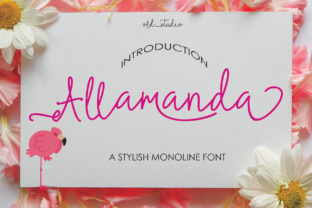
Allamanda Font: A Modern Handwritten Script for Branding Projects
I recently sat down with a new branding project in front of me—something I always look forward to. The client was a local skincare brand aiming for a fresh, natural aesthetic that felt handcrafted yet professional. As I opened my design board and began sketching out ideas, I knew the right typeface would be crucial. That’s when I stumbled upon Allamanda, a modern handwritten font that immediately caught my eye. It had the perfect balance between elegance and approachability, making it ideal for projects like this one.
Using Allamanda for Skincare Brand Packaging Design
The first thing I did was test Allamanda on a product label mockup. I wanted to see how it translated into something tangible, like a jar of moisturizer or a box of bath salts. What stood out was its monoline cursive script—each stroke flows evenly, giving the text a refined yet human feel. Unlike some overly ornate scripts, Allamanda doesn’t distract from the message. Instead, it enhances the visual warmth, which is exactly what the brand needed to communicate purity and care.
On labels and stickers, Allamanda added a touch of authenticity without becoming too whimsical. I made sure to check if there were alternates and ligatures included, which there were. This flexibility allowed me to tweak certain characters for better flow and uniqueness in the logo. The ability to subtly customize the font while keeping its clean structure is a huge plus for brand identity work.
Allamanda in Logo Design for Creative Businesses
Next, I moved on to the logo concept. Since the brand was all about simplicity and nature, I didn’t want a busy or complicated design. I used Allamanda as the primary typeface and layered it over a soft watercolor background. The result was a logo that felt both organic and polished. Clients often underestimate how much personality a single font can bring, but with Allamanda, the effect is subtle yet powerful.
I also tested it alongside a few serif fonts for contrast. One of them worked well as a supporting typeface for taglines and body copy. But when using Allamanda alone, especially in uppercase variations, the logo gained a unique presence. Its modern handwritten style gave the brand a creative edge, aligning perfectly with their artisanal products.
Testing Allamanda in Social Media Graphics and Posters
With the logo locked in, I wanted to see how Allamanda performed across different platforms. On an Instagram post mockup, the font really came alive. It’s not just a decorative script—it feels intentional and curated. When paired with minimalist photography and muted tones, the brand’s messaging became more personal and trustworthy.
I also created a poster design using Allamanda for the headline and a sans serif font for the supporting text. The contrast helped establish a clear visual hierarchy. Even though Allamanda is a script, it held up well in larger sizes and short phrases. For smaller text, I’d recommend using it sparingly—maybe for a tagline or call-to-action—but it shines most when used as a display font or accent.
Allamanda for Website Headers and Digital Templates
Web design is another area where Allamanda impressed me. I placed it in the hero section of a homepage mockup, and it looked stunning. Its natural curves added movement without compromising legibility. Of course, I made sure to optimize the weight so it rendered clearly on mobile screens. As a designer, I love when a font works well both offline and online, and Allamanda definitely fits that bill.
When building digital templates for the client, I found that Allamanda adapted well to various formats—PDFs, web headers, even SVG files for custom illustrations. Its file format compatibility and multilingual support were reassuring for a brand that might expand in the future. It’s rare to find a handwritten script font that feels so versatile for commercial use.
How Allamanda Impacts Brand Perception and Recognition
One of the key things I consider when choosing a font is how it affects brand perception. With Allamanda, the tone is warm, inviting, and contemporary. It conveys creativity and craftsmanship, which are essential for niche businesses like this skincare brand. I noticed that the font's consistent line width made it easier to build a cohesive system, especially when repeating elements like product names or packaging motifs.
What’s more, the font’s readability at mid-size levels surprised me. Some handwritten scripts can become hard to read in anything but large sizes, but Allamanda maintains clarity even in subheadings. This makes it a solid choice for editorial design, such as magazine spreads or blog headers, where you still want a creative vibe but need functional typography.
Pairing Allamanda with Supporting Typefaces
Font pairing is a delicate art, and Allamanda gives you a lot of room to play. In my tests, I found that it pairs beautifully with a clean sans serif like Lato or Montserrat. These combinations keep the design grounded while letting Allamanda take center stage. If you're going for a more classic feel, a serif like Playfair Display or Merriweather can add depth and sophistication.
I also experimented with combining it with other script fonts, but honestly, it didn’t need any help. Allamanda has a distinct character that holds its own. Using it with another script often muddies the message, whereas sticking to one strong typeface builds stronger brand recognition. Just make sure your supporting fonts don’t clash in rhythm or scale.
Practical Tips for Testing Allamanda Before Full Use
If you’re considering Allamanda for your next project, here’s what I recommend doing before finalizing the design:
- Test it in real context: Try it on a business card layout, a website header, or a product label. See how it behaves in different environments.
- Check spacing and kerning: Like many handwritten fonts, Allamanda requires careful adjustment to ensure it looks balanced and elegant.
- Review licensing options: Confirm whether the font supports your intended usage—especially if you're working on commercial branding or merchandise like tote bags or stickers.
- Look for alternates: The included glyph variations allow you to personalize the brand assets without losing consistency.
These steps helped me determine how much the font could contribute to the overall brand system. And once I saw it in action across multiple materials, I knew it was a good fit.
Allamanda for Boutique Branding and Merchandise
Boutique brands often thrive on a sense of exclusivity and personal touch, and Allamanda delivers just that. I used it on a series of mockups for branded merchandise—a ceramic mug, a tote bag, and a sticker set. Each time, the font elevated the product’s perceived value. It wasn’t just text; it was part of the story the brand wanted to tell.
For instance, the shop sign design incorporated Allamanda in bold, with a simple color palette. The combination made the signage stand out without feeling overwhelming. The same went for the business cards: using the font in a small size but maintaining its charm was possible thanks to its clean construction.
Allamanda in Flyers and Printed Marketing Materials
Flyers and printed marketing materials are where I really appreciated Allamanda’s adaptability. I designed a sample flyer promoting a seasonal sale and placed the font in the headline. The response from my team during a review session was overwhelmingly positive. People commented on how it felt both artistic and trustworthy—an important balance in print design.
What I liked best was how it handled different weights. While it’s a monoline script, slight adjustments in opacity and stroke thickness helped differentiate sections without needing a separate font. This kind of control is invaluable when you're designing for a boutique or small business that wants a premium look on a budget.
Why Allamanda Fits Well in Editorial and Creative Studio Work
Another interesting application for Allamanda was in editorial design. I used it for headings in a lifestyle blog layout and it brought a refreshing energy to the content. It worked particularly well in quotes and pull-out sections, where it drew attention naturally without being garish.
For a creative studio looking to showcase their services, Allamanda could serve as the signature typeface in presentations or brochures. It adds a layer of professionalism with its modern handwritten style, which helps distinguish the brand from competitors who might lean too heavily on traditional sans serifs.
Final Thoughts on Allamanda for Branding and Beyond
In the end, the client loved how Allamanda added a human element to their branding. It didn’t scream “handmade,” but it certainly whispered it. Whether you're designing for a café menu, a product label, or a social media campaign, this font offers the right amount of flair without sacrificing function. It’s the kind of Script Handwritten font that makes you rethink how far a single typeface can go in shaping a brand’s identity.
If you’re a designer looking for a clean, modern, and expressive option for your next project, give Allamanda a try. You might just find it to be the Fonts solution you’ve been waiting for—one that bridges the gap between casual and professional, and brings a natural charm to everything it touches.